



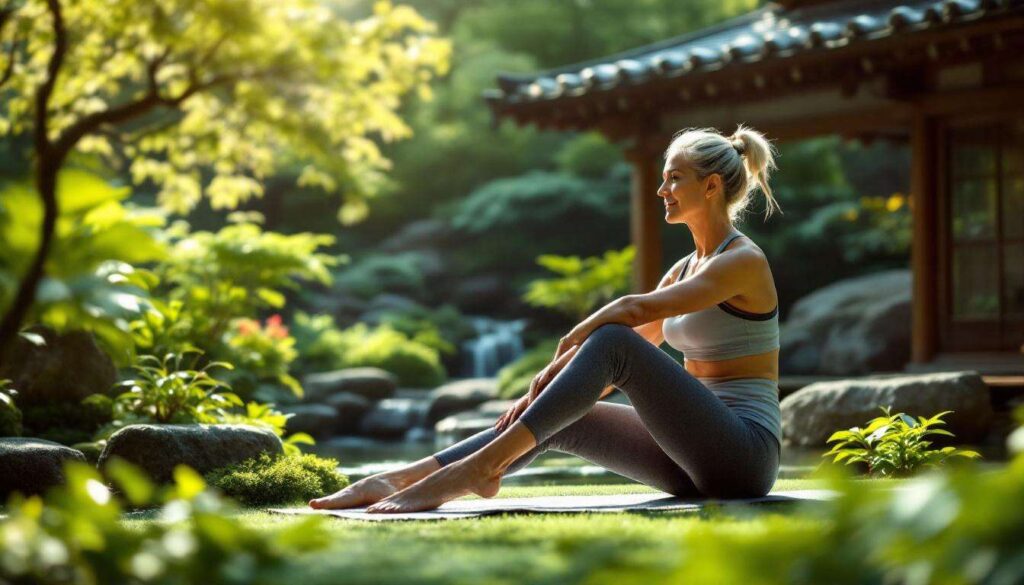
Knee pain and weakness become increasingly common concerns as we age, particularly after reaching the milestone of 50 years. Traditional Western approaches often emphasize high-impact exercises that can paradoxically worsen joint problems. Japanese wellness practices offer a refreshing alternative, focusing on gentle movements that strengthen the knees without placing stress on already vulnerable joints. These time-tested techniques have helped countless individuals maintain mobility and independence well into their later years, combining physical movement with mindful breathing and relaxation principles that address both the body and mind.
The Japanese method for strengthening knees after 50
Origins of Japanese joint care philosophy
The Japanese approach to knee health stems from centuries of traditional practices that emphasize harmony between body and movement. Unlike Western fitness culture that often promotes the “no pain, no gain” mentality, Japanese methods prioritize sustainable wellness through gentle, consistent practice. This philosophy recognizes that aging joints require special attention and care rather than aggressive intervention.
Japanese practitioners have long understood that zero joint stress does not mean zero effectiveness. The key lies in working with the body’s natural mechanics rather than against them. This approach has gained recognition globally as research continues to validate what Japanese elders have known for generations.
Core principles of the method
The foundation of this method rests on several interconnected principles:
- Minimal impact on cartilage and surrounding tissues
- Gradual progression that respects individual limitations
- Integration of breath work with physical movement
- Focus on muscle engagement without joint compression
- Daily consistency over intense sporadic sessions
These principles work together to create a comprehensive system that addresses knee strength from multiple angles. The emphasis on daily practice ensures that muscles surrounding the knee joint receive regular stimulation without the recovery periods required by high-impact activities.
Understanding these foundational concepts provides the necessary context for exploring how Japanese culture views joint health differently than many Western approaches.
Understanding the Japanese concept of stress-free knees
What defines zero joint stress
The term zero joint stress refers to movements that strengthen supporting muscles without compressing, twisting, or overextending the knee joint itself. This concept challenges the common misconception that effective exercise must create discomfort or fatigue in the target area. Instead, Japanese methods focus on peripheral muscle engagement that indirectly supports the knee structure.
| Traditional Exercise | Japanese Zero-Stress Method |
|---|---|
| Direct joint loading | Muscle-focused engagement |
| Impact and compression | Fluid, continuous motion |
| Pain as progress indicator | Comfort as success marker |
| Isolated joint work | Whole-body integration |
The role of body awareness
Central to the Japanese approach is heightened proprioception, the body’s ability to sense its position and movement in space. Practitioners learn to distinguish between productive muscle engagement and potentially harmful joint stress. This awareness develops gradually through mindful practice and attention to subtle sensations.
Developing this sensitivity allows individuals to adjust movements in real-time, ensuring they remain within safe parameters while still challenging their muscles appropriately. The practice becomes a form of moving meditation that benefits both physical and mental well-being.
These philosophical foundations translate into tangible benefits that extend beyond the knees themselves.
The benefits of Japanese exercises for joints
Physical improvements observed
Research and anecdotal evidence demonstrate numerous advantages of this gentle approach:
- Enhanced stability: stronger muscles around the knee joint provide better support during daily activities
- Increased flexibility: gentle movements maintain and improve range of motion without forcing joints
- Reduced inflammation: low-stress exercises promote circulation without triggering inflammatory responses
- Better balance: integrated movements improve overall coordination and fall prevention
- Pain reduction: many practitioners report decreased discomfort within weeks of consistent practice
Long-term sustainability advantages
Unlike high-impact programs that many people abandon due to pain or injury, Japanese knee exercises offer remarkable adherence rates. The gentle nature of these movements means individuals can continue practicing them indefinitely without concern about overuse injuries or joint deterioration.
This sustainability factor proves crucial for older adults who need lifelong maintenance strategies rather than short-term fixes. The exercises adapt easily to changing ability levels, allowing practitioners to modify intensity while maintaining the core benefits.
With these advantages established, examining the specific techniques reveals how they achieve such impressive results.
Gentle stretching: a proven technique for knees
The first exercise: seated knee extension
This foundational movement involves sitting on a chair with feet flat on the floor. The practitioner slowly extends one leg forward, keeping the movement controlled and stopping before the knee fully locks. The position holds for five to ten seconds before slowly returning to the starting position. The key lies in maintaining constant muscle tension throughout the movement without allowing momentum to take over.
Proper execution requires:
- Keeping the spine straight and shoulders relaxed
- Flexing the foot toward the shin during extension
- Breathing steadily throughout the movement
- Focusing attention on the quadriceps muscle engagement
- Performing eight to twelve repetitions per leg
Modifications for different ability levels
Beginners may start with partial extensions, raising the leg only a few inches off the ground. As strength improves, the range of motion naturally increases. Adding a resistance band around the ankle provides additional challenge without joint compression for more advanced practitioners.
The beauty of this exercise lies in its simplicity and adaptability, making it accessible regardless of current fitness level. Building on this foundation, the second technique addresses muscle strength through a different approach.
Non-impact muscle strengthening: the Japanese alternative
The second exercise: wall-supported knee circles
Standing with one hand on a wall for balance, the practitioner lifts one foot slightly off the ground and traces small circles in the air with the knee. This movement engages the hip flexors and quadriceps while the knee joint itself moves through its natural range without bearing weight. Circles should be smooth and controlled, performed in both directions.
Technical points include:
- Maintaining a stable standing leg throughout
- Keeping circles small initially, expanding as comfort allows
- Coordinating breath with movement patterns
- Performing ten circles in each direction per leg
- Focusing on quality of movement over quantity
The third exercise: isometric knee holds
While lying on the back with one leg extended and the other bent, the practitioner lifts the straight leg approximately six inches off the ground and holds this position. This isometric contraction builds muscle endurance without any joint movement whatsoever, representing the ultimate expression of zero joint stress training.
Duration begins at ten seconds and gradually increases to thirty seconds or more as strength develops. The exercise challenges muscles intensely while the knee remains in a completely neutral, unstressed position.
These physical exercises gain additional effectiveness when combined with specific breathing and mental techniques.
Relaxation and breathing: the key to joint recovery
Integrating breath work with movement
Japanese practice emphasizes coordinated breathing that enhances exercise effectiveness. Practitioners typically inhale during the preparation phase and exhale during the exertion phase, though some movements reverse this pattern. The breath serves as both a timing mechanism and a tool for maintaining relaxation throughout challenging holds.
Deep abdominal breathing activates the parasympathetic nervous system, reducing muscle tension that might otherwise compromise form or create unnecessary strain. This integration transforms simple exercises into holistic practices that benefit the entire body.
Post-exercise relaxation protocols
Following the exercise sequence, Japanese tradition recommends a brief period of conscious relaxation. Lying comfortably with knees supported by a rolled towel or cushion, practitioners focus attention on the knee area while breathing deeply. This practice promotes:
- Enhanced blood flow to exercised tissues
- Reduced residual muscle tension
- Mental integration of the practice
- Improved body awareness for future sessions
This concluding relaxation period transforms exercise from mere physical activity into a comprehensive wellness practice that addresses multiple dimensions of health simultaneously.
The Japanese method for strengthening knees after 50 offers a sustainable, effective alternative to high-impact Western approaches. Through three carefully designed exercises, seated knee extensions, wall-supported knee circles, and isometric holds, practitioners can build significant strength without stressing vulnerable joints. The integration of mindful breathing and post-exercise relaxation elevates these movements beyond simple physical training, creating a holistic practice that respects the aging body while promoting genuine improvement. Consistency rather than intensity drives results, making this approach accessible and maintainable for individuals at any fitness level seeking to preserve mobility and independence throughout their later years.