



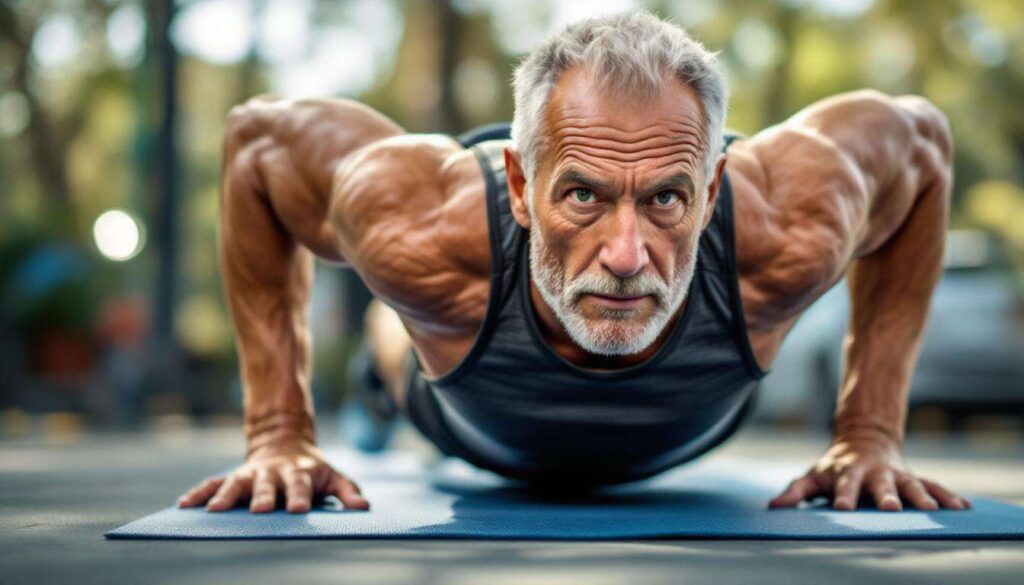
Fitness trends come and go, but one truth remains constant for those over 50: the way you train matters more than ever. Personal trainers across the country are witnessing a shift in how older adults approach exercise, moving away from complicated gym machinery toward something far more fundamental. The human body, with its intricate systems of muscles, joints, and connective tissues, responds remarkably well to exercises that mirror natural movement patterns. As we age, maintaining functional strength becomes not just about aesthetics but about preserving independence and quality of life.
The Benefits of Bodyweight Exercise After 50
Enhanced functional strength for daily activities
Bodyweight exercises directly translate to real-world movements that older adults perform every day. Getting up from a chair, climbing stairs, or carrying groceries all require the same muscle groups activated during squats, lunges, and push-ups. Unlike isolated machine exercises that target single muscle groups, bodyweight movements engage multiple muscle groups simultaneously, creating coordination patterns the body actually uses.
Research shows that functional fitness significantly reduces the risk of falls and injuries in people over 50. The compound nature of these exercises means:
- Improved core stability during everyday tasks
- Better coordination between upper and lower body
- Enhanced proprioception and spatial awareness
- Greater muscle recruitment across movement chains
Joint-friendly progressive resistance
The beauty of bodyweight training lies in its adaptability to individual fitness levels. Unlike machines with fixed weight increments, bodyweight exercises allow for infinite modifications. A person can adjust leverage, range of motion, or tempo to match their current capabilities while protecting vulnerable joints from excessive stress.
| Exercise Type | Joint Impact | Customization Level |
|---|---|---|
| Bodyweight exercises | Low to moderate | Highly customizable |
| Weight machines | Moderate to high | Limited options |
| Free weights | Variable | Moderate |
This flexibility becomes particularly important as joint health naturally declines with age, allowing continued progress without unnecessary pain or inflammation.
Understanding these advantages naturally leads to questioning why traditional gym equipment might not serve older adults as effectively.
Why Favor Bodyweight Over Gym Machines
The limitation of fixed movement patterns
Gym machines typically force users into predetermined movement paths that may not align with individual body mechanics. A 55-year-old with previous shoulder injuries or natural anatomical variations might find machine exercises uncomfortable or even harmful. The rigid tracks and seats don’t account for differences in limb length, joint flexibility, or past injuries that become more common after 50.
Bodyweight exercises, conversely, allow the body to move through its natural range of motion. This freedom reduces compensatory movement patterns that can lead to strain and injury over time.
Building stabilizer muscles machines neglect
When using a leg press machine, the equipment provides stability. With bodyweight squats, however, dozens of smaller stabilizer muscles must engage to maintain balance and proper form. These often-overlooked muscles play crucial roles in:
- Preventing falls during uneven terrain navigation
- Maintaining posture throughout the day
- Supporting larger muscle groups during complex movements
- Protecting joints from excessive stress
For older adults, these stabilizer muscles represent the difference between confident movement and hesitant, uncertain steps that increase fall risk.
Cost and accessibility considerations
Gym memberships and home equipment represent significant financial investments. Bodyweight training requires minimal to zero financial commitment, removing barriers that prevent many older adults from maintaining consistent exercise routines. The living room floor provides everything needed for a comprehensive workout.
Beyond the practical advantages, the actual execution of bodyweight training offers surprising simplicity.
The Simplicity and Effectiveness of Bodyweight Exercises
No learning curve for complex equipment
Walking into a modern gym can feel overwhelming, with rows of intimidating machines featuring pulleys, cables, and adjustment mechanisms. Each requires specific setup procedures and form cues that take time to master. For someone over 50 who may feel self-conscious about their fitness level, this complexity creates an unnecessary obstacle.
Bodyweight movements build on patterns the body already knows. Push-ups resemble the motion of pushing open a heavy door. Squats mirror sitting down and standing up. This intuitive nature accelerates progress and builds confidence quickly.
Immediate feedback and body awareness
Machines can mask poor form or muscle imbalances because they provide external support. Bodyweight exercises demand that practitioners develop kinesthetic awareness, the ability to sense where their body exists in space and how muscles are working. This heightened awareness translates directly to better posture and movement quality in daily life.
When performing a plank, for example, the immediate feedback from core engagement or lack thereof teaches the body proper alignment without needing a trainer’s constant supervision.
Scalability from beginner to advanced
The same exercise framework works across all fitness levels through simple modifications:
- Wall push-ups progress to incline push-ups, then floor push-ups
- Assisted squats advance to bodyweight squats, then single-leg variations
- Knee planks build toward full planks and eventually dynamic plank variations
This progressive overload happens naturally without purchasing new equipment or learning entirely new movements.
The physical benefits extend beyond strength into areas particularly critical for aging populations.
Preserving Mobility and Balance as You Age
Dynamic movements that challenge equilibrium
Balance deterioration represents one of the most significant health risks for people over 50. Bodyweight exercises inherently challenge balance systems because they require maintaining stability without external support. Single-leg deadlifts, lateral lunges, and mountain climbers all force the vestibular system to work actively.
This constant engagement strengthens the neuromuscular connections responsible for quick balance corrections that prevent falls.
Flexibility integrated into strength training
Unlike machines that often promote shortened muscle positions, bodyweight exercises encourage full range of motion. Deep squats improve hip and ankle flexibility. Push-ups open the chest and shoulders. This dual benefit means practitioners develop strength through complete movement ranges rather than just at specific angles.
| Mobility Aspect | Bodyweight Benefit | Long-term Impact |
|---|---|---|
| Hip flexibility | Deep squats and lunges | Easier stair climbing |
| Shoulder mobility | Push-ups and planks | Better overhead reach |
| Ankle stability | Single-leg exercises | Reduced fall risk |
Preventing the sedentary decline
The convenience of bodyweight training makes consistency more achievable. Without needing to travel to a gym, older adults can maintain regular movement patterns that combat the muscle loss and stiffness associated with sedentary aging. Even brief 10-minute sessions throughout the day accumulate meaningful benefits.
For those ready to begin, specific guidance helps ensure safe and effective practice.
Personal Trainer Tips for Beginners
Start with mobility assessments
Before beginning any exercise program, understanding current movement capabilities prevents injury and establishes realistic starting points. Simple tests include:
- Sitting on the floor and standing up without hand support
- Reaching overhead with straight arms
- Balancing on one foot for 30 seconds
- Squatting to a comfortable depth with heels down
These assessments reveal limitations that require modification or preliminary mobility work.
Prioritize form over repetitions
The ego-driven approach of maximizing repetitions creates injury risk. Personal trainers emphasize quality movement patterns over quantity, especially for older adults whose recovery capacity differs from younger exercisers. Performing five perfect squats builds better foundations than twenty sloppy ones.
Video recording workouts provides valuable feedback, allowing practitioners to compare their form against proper technique demonstrations.
Implement progressive overload carefully
Progression doesn’t always mean harder variations. For beginners over 50, advancement might involve:
- Adding one more repetition per week
- Holding positions slightly longer
- Reducing rest periods between exercises
- Improving range of motion gradually
This patient approach respects the body’s adaptation timeline while still providing stimulus for improvement.
Practical application requires specific exercises suited to older adults’ needs and capabilities.
Examples of Bodyweight Exercises to Try at Home
Lower body foundational movements
Chair squats provide an excellent starting point for leg strength. Standing in front of a sturdy chair, lower down until barely touching the seat, then stand back up. This built-in safety mechanism prevents falling while building the strength needed for unsupported squats.
Wall sits develop isometric leg strength by holding a seated position against a wall for 20-30 seconds. This exercise strengthens quadriceps without requiring balance or complex coordination.
Upper body pushing and pulling
Wall push-ups allow anyone to begin building upper body strength regardless of current fitness level. Standing arm’s length from a wall, place hands flat and perform push-ups at an incline. As strength improves, move to countertop height, then eventually the floor.
For pulling movements without equipment, doorway rows work effectively. Standing in a doorway, grip the frame and lean back, pulling the body forward using back muscles.
Core stability exercises
The dead bug exercise builds core strength while protecting the lower back. Lying on the back with knees bent and feet raised, slowly extend opposite arm and leg while maintaining back contact with the floor.
Bird dogs challenge balance and core stability simultaneously. On hands and knees, extend opposite arm and leg while maintaining a neutral spine position.
Sample weekly routine structure
| Day | Focus Area | Example Exercises |
|---|---|---|
| Monday | Lower body | Chair squats, wall sits, calf raises |
| Wednesday | Upper body | Wall push-ups, doorway rows, planks |
| Friday | Full body | Squats, push-ups, dead bugs, bird dogs |
The evidence supporting bodyweight training for older adults continues mounting as more people discover its accessibility and effectiveness. Personal trainers consistently observe better adherence rates, fewer injuries, and more functional improvements compared to machine-based programs. The exercises require no special equipment, adapt to any fitness level, and directly improve the movements that matter most in daily life. For anyone over 50 seeking sustainable fitness solutions, bodyweight training offers a practical path toward maintained independence, reduced injury risk, and enhanced quality of life well into the later decades.